
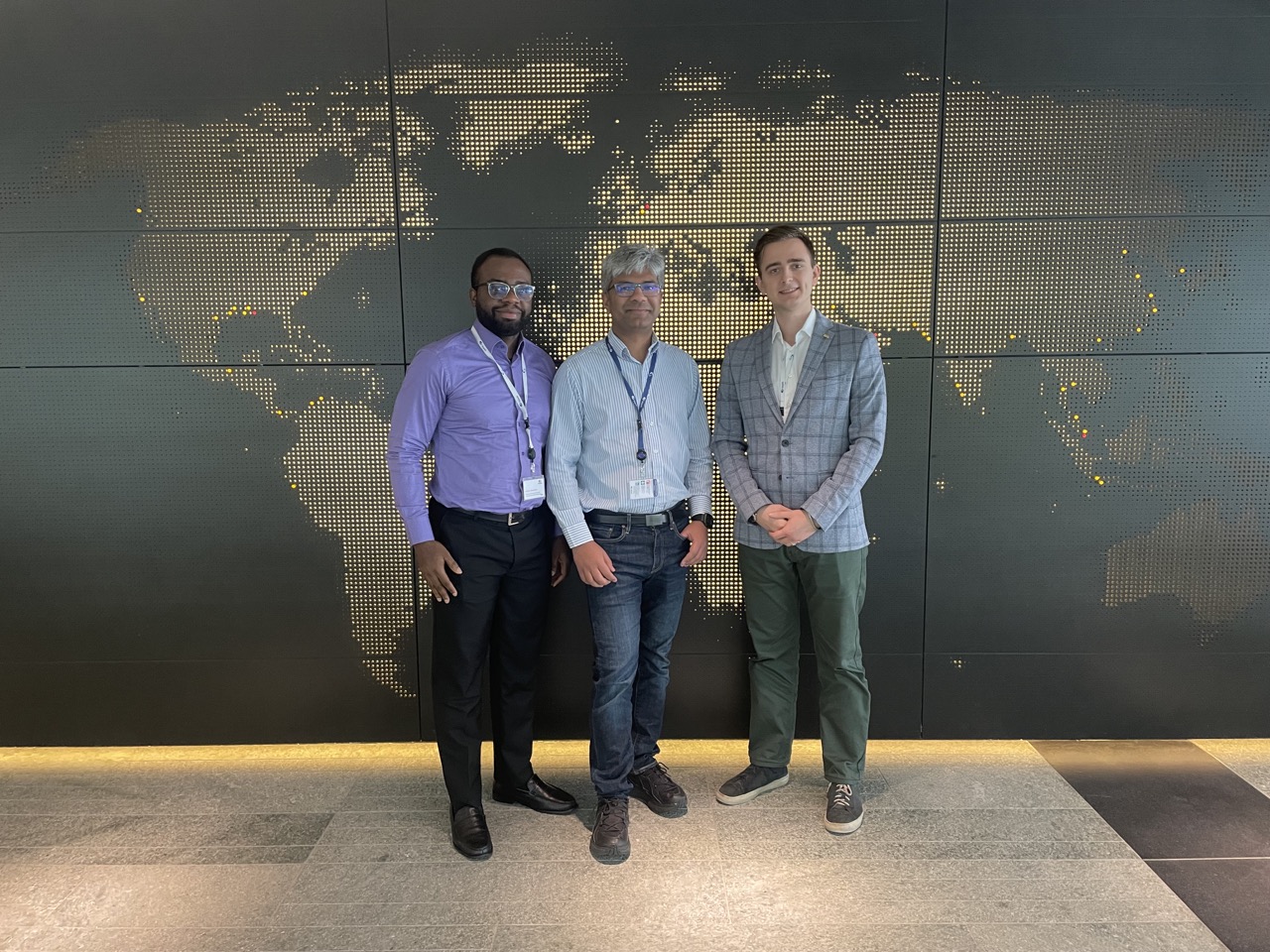
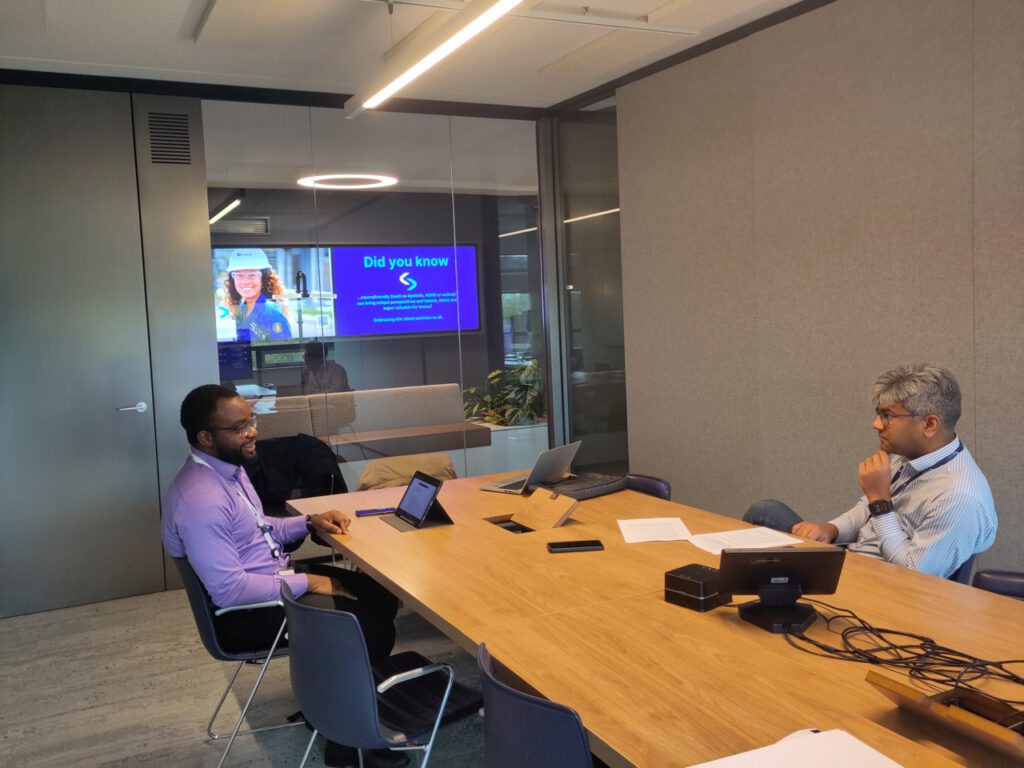
Royal Vopak is an internationally operating storage provider for liquid fuels such as oil and gas and a member of World Energy Council Netherlands. In its 400 years long history, Vopak has undergone various transformation processes. Our Future Energy Leaders Odinakachi Umunna and Ivo Wakounig sat down with Sabih Shad, Vice President for Global LNG at Vopak, at their head office in Rotterdam to learn about Vopak’s role in the current and future energy system, especially in LNG.
Odinakachi Umunna: What is Vopak’s role in the energy system both in the Netherlands here and globally?
Sabih Shad: Vopak plays a critical role in the energy and chemical supply chains globally. We have import and export terminals all across the world. Globally our presence is in 23 countries and we have 77 terminals, which are vital for energy security. If I talk about the Netherlands specifically, we have large-scale energy import terminals like Gate and Eems Energy. Beside that we also have large oil hub terminals at Europoort, biofuels storage in Vlaardingen and strategic oil storage in Eemshaven that really provide a meaningful amount of storage within the Netherlands. In LPG, we have a major facility in Vlissingen which is considered a price point for LPG in the market.
Ivo Wakounig: Given that Vopak is operating in so many countries with different climate goals, how do you aim to become carbon neutral as Vopak?
Sabih Shad: We provide a critical infrastructure that is part of a much larger supply chain. Our own emissions in the whole value chain are relatively small. What we do at the same time is make investments that enable a lot of carbon reduction supply chains to materialize. We do have a plan to invest in more infrastructure to enable products like ammonia, liquid CO2, low carbon fuels, and feedstocks, as well as battery storage. But again, if we come specific to the question that you had, we do have a net zero scope 1 and scope 2 emissions target by 2050, but it should always be seen in the context of the overall role in decarbonisation.
Odinakachi Umunna: To what extent do you think LNG can contribute to energy transitions?
Sabih Shad: LNG is basically a form of transporting gas. So at the heart of it is natural gas and specifically LNG provides you the ability to have flexibility in your power systems. And having the ability to have flexibility in your power system enables more renewables to be a part of those power systems. Additionally it also helps you switch from more polluting fuels like coal and oil and it substantially improves the air quality. So overall, if you look at what LNG is doing, it’s pretty much taking you in the direction of a transition. And also within the LNG market you see developments like bio-LNG and more in the future synthetic (e-LNG). The same infrastructure can be used for this.
Ivo Wakounig: Please, give us a little bit of an understanding of how Vopak today and in the future is involved in the LNG business?
Sabih Shad: If you look at the LNG value chain, it starts with producing gas, liquefying it, shipping it, regasifying it, transporting it, and consuming it. Vopak’s role is specifically on the regasification side. So we build terminals to receive and store LNG, regasify it, and deliver it to the gas grid. We have a 2% to 3% market share globally in this business with terminals in places like The Netherlands, Pakistan, Mexico, and Colombia. Typically we partner with local pipeline companies to deliver a solution that is fit for that market. If you look at the overall LNG industry, there is a lot of additional supply coming online over the next five years. Our intention is to grow with the market and provide regas solutions in the markets where we are present in or elsewhere where we can add value[1] .
Odinakachi Umunna: Ever since I joined the energy industry I’ve been hearing about the World Energy Trilemma. When you think about LNG in the context of the energy trilemma, how would you say LNG fares?
Sabih Shad: The trilemma will always be in context of where you are and your alternatives. So if you look at security, LNG was actually the source of security of supply for the European market in the past few years. That is also the theme in many markets where either existing gas fields are depleting or where there is a need for additional power generation but that people say I just need security of supply. Then, when it comes to affordability, it’s good to recognize that there are economies of scale that are involved and if you’re at the right scale for LNG and the market is balanced, then it is fairly affordable. Again context, you could say it is more expensive than coal fired power generation, at the same time it is nearly always cheaper than oil-fired power generation and that does happen in quite a few markets where people still burn diesel for power generation. Then on sustainability, again, if you are replacing coal and oil you are sustainable in terms of emissions and particulate matter. If you are replacing depleted gas fields, it is sustainable from a perspective of keeping industries alive and keeping infrastructure that is already in place functional for a longer period. When you look at renewables, they are not yet there where you can get to base load with renewables and batteries. This acts as something that enables more renewables to actually be part of the power mix, because a power mix requires flexibility and this is a source of flexibility.
Ivo Wakounig: How do you see adoption of LNG in the EU energy system? What kind of challenges do you foresee?
Sabih Shad: If you look at the EU energy system, LNG has been a part of it for a long time. In the past few years there was a big push to replace Russian pipeline gas with LNG, which contributed to an increasing role of LNG in the system. There is not expected to be a similar jump again. There will be gradual further adoption that happens as a balancing act, but most of the infrastructure is there. When it comes to challenges, these can be temporary technical issues; that always happens in any industry and are always solved because it’s easy to pinpoint and resolve. But there are also a lot of challenges with respect to the regulatory and permitting environment, when it comes to extending the life of assets and expanding assets.
Ivo Wakounig: What are expectations when it comes to the molecule mix in the future?
Sabih Shad: It is quite clear from our strategy also that there is a molecule mix change that is happening. We have allocated capital to build terminals in the space of newer molecules. We have also been divesting from oil, so there is clearly a changing role for oil in our portfolio. By 2035 we plan to repurpose 30% to 40% of our oil-hub capacity. Instead of oil it might be storing biofuels or something like that. We do see there is a continued strong role for LNG and LPG as critical transition fuels, so that is why you see continued investments in both LNG and LPG happening. And for the future we do invest in ammonia as a hydrogen carrier, liquid CO2 for carbon capture, sustainable fuels and feedstocks. We do invest in batteries as well, because electrons are also going to be a more important source of energy that needs to be stored, which is typically not stored in yesterday’s market.

Ivo Wakounig: How do you bridge short-term interests with long-term infrastructure planning?
Sabih Shad: We currently have an improve, grow and accelerate strategy, so there are three pillars to the strategy. The improve pillar is all about optimizing the existing portfolio, getting the most cash flow out of it and delivering short-term results. The grow pillar is about investing in core markets such as industrial and gas terminals. And then there is accelerate in which we invest in other infrastructure that is necessary for the transition. I think besides that for us it is important to have a good mix between long-, mid- and short-term contracts. That means that we are partially protected in a downturn by those long-term contracts, and we also get the advantage of an upside by some of the short-term contracts.
About Sabih Shad
Sabih Shad is VP for Global LNG at Vopak. His primary focus is to identify and develop partnerships with existing and future customers so that they can develop new LNG terminals across the globe. Before joining Vopak, Sabih Shad worked at Engro Fertilizers in Karachi, Pakistan.

