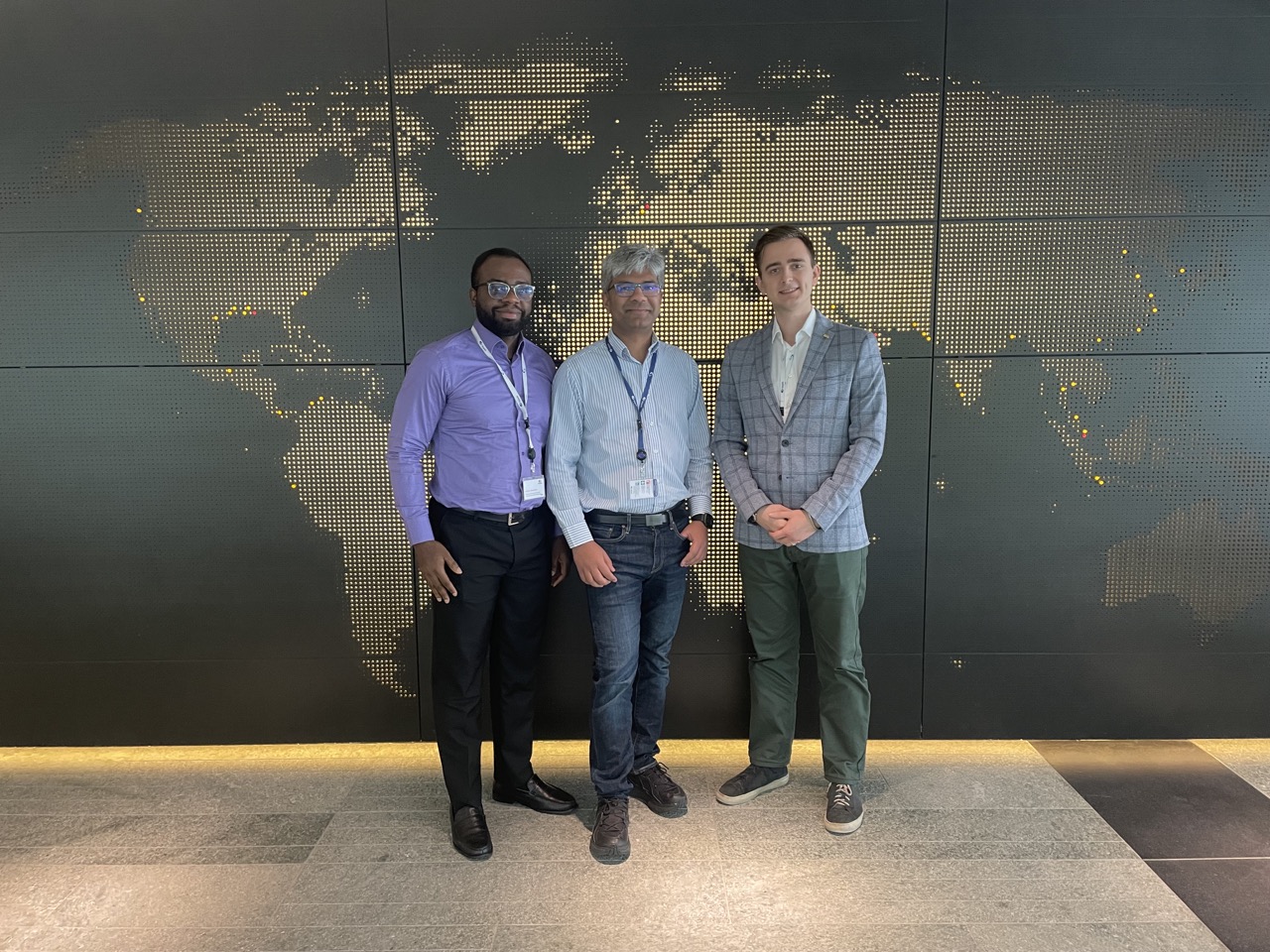
A Conversation with Aad Groenenboom, Secretary General, World Energy Council Netherlands
Interview by Future Energy Leader, Varsha Ram
Introduction
The discussions in Panama offered a timely reality check on the state of the global energy transition and delivered a clear message for Western Europe and the Netherlands. Drawing on his observations, Aad explores what these signals mean for Dutch and European policymakers and industry leaders, where current transition narratives are falling short, and why global perspectives matter more than ever. He also reflects on the role of intergenerational collaboration and how WEC NL’s work is helping to “humanise” the energy transition, bridging policy, industry, and people as the world navigates an increasingly complex road toward a resilient, inclusive net-zero future.
A Cooling Enthusiasm, But a Clearer Reality
Looking back at World Energy Week, Aad’s strongest impression is that global enthusiasm for a rapid, fully electrified transition has cooled, but not disappeared. Many countries still share the long-term vision of a net-zero energy system, yet are recalibrating the pace and pathway in light of practical constraints, political shifts, and their own resource positions. “The overall picture of the transition is still valid,” he reflects, “but certain countries do not want to rely only on electrification, but want to maintain a stable position in fossil fuels because of their own interest and because they see the risks of going for 100% electrification.”
For Europe and the Netherlands, this sobering tone is a reminder that energy is not just about technology, but also about power, geopolitics, and dependency. Europe imports a large share of its energy and must manage its transition from a structurally weaker resource position than regions like the United States or the Middle East. This makes diversification of energy sources and partners, and a realistic view on timing and costs, critical components of any credible transition strategy.
Humanising Energy in Western Europe
Throughout the conversation, Aad returns to one central theme: the need to “humanise” energy. In his view, citizens were largely absent from earlier decision-making tables, yet they are the ones who ultimately pay the bills and live with the consequences of policy choices, from higher prices to changes in local environments. With energy costs rising and timelines tightening, keeping public support is no longer a soft issue but a hard prerequisite for delivering the transition.
Humanising energy also means recognising that transitions are implemented by people, not just designed on paper. There is already a shortage of skilled workers in the energy sector, and the large-scale build-out of renewable generation, grids, hydrogen, and nuclear will require many more technicians, engineers, and specialists. Aad sees job creation, skills development, and intergenerational collaboration as core elements of a just and workable transition narrative for Western Europe. As he notes, “What I see is that on a local government level, in states within the United States, but also municipalities and provinces, everybody is still convinced that we need to continue on the transition path.”
Intergenerational Collaboration as a Strategic Asset
For Aad, intergenerational collaboration is not a “nice to have”; it is essential to making the transition work. The older generation brings experience of past system changes—from liberalisation of the Dutch power market to the closing of Groningen’s gas field—while the younger generation brings new skills, especially around digitalisation, new business models, and changing societal expectations. Both perspectives are needed to navigate a transition that is simultaneously technical, economic, social, and geopolitical.
He points to examples where FEL-NL members already contribute: joining study teams such as the “Valuing Industries” project with TNO, visiting companies, and co-shaping events and dialogues. Having a Future Energy Leader like Ivo on the WEC NL board is, in his eyes, a concrete demonstration that young professionals are not just consulted, but share responsibility for decisions and direction. Looking ahead, he hopes FEL-NL will bring even more innovative ideas and provocative questions to challenge established thinking. “The younger generation needs to adapt to it completely and we as the older generation, we need to forget about what we were doing, but we need to take into account how we make this change,” he emphasises.
The Dutch Reality Check
For the Netherlands, Aad’s reflections point to three clear priorities:
- First, the transition needs a broader toolbox. Electrification remains central, but hydrogen and nuclear are no longer side debates. If they are to contribute meaningfully by 2040, decisions on policy, permitting, and investment have to be taken now.
- Second, people are the make-or-break factor. Public support, workforce capacity, and skills development are not soft issues. Without them, even well-designed transition strategies will struggle to deliver.
- Third, Europe matters more than ever. Energy security, industrial competitiveness, and access to finance cannot be solved nationally. The Netherlands’ transition will succeed only if it is anchored in deeper European cooperation.
Broadening Europe’s Transition Toolbox
Aad argues that Western Europe, and the Netherlands in particular, must broaden their view of the energy transition beyond electrification alone. He points to three areas in particular: critical materials, hydrogen, and cross-border cooperation. Europe depends heavily on imports for energy and many raw materials, which makes resilience and diversification central strategic concerns rather than technical details.
The Netherlands, with its North Sea resources and the Port of Rotterdam, has a unique position in this picture. Aad sees large potential to produce electricity and hydrogen offshore, and then use the Netherlands as a hub to supply both domestic industry and neighbouring countries such as Germany’s industrial heartland. Hydrogen, in his view, will be a key pillar for energy-intensive industries, especially steel and chemicals, even if current costs remain high and require time and policy support to come down. “We can produce hydrogen on the North Sea and via Rotterdam we can transport it to Germany for their production industry in the rural area. We can also use it for steel production in the Netherlands. The energy intensive industry is very much eager to go to hydrogen,” he explains.
AI, Demand, and the Energy Cost of Digital Growth
Panama’s discussions on demand-led resilience and digitalisation resonated strongly with Aad, particularly the role of artificial intelligence (AI). He expects AI to reshape both energy production and demand management, enabling more efficient industrial processes, smarter energy trading, and better interaction between utilities and their customers. Used well, AI can unlock new efficiencies and help balance increasingly complex energy systems.
At the same time, he is clear-eyed about the risks: data centres already consume vast amounts of energy and could account for a significant share of global demand in the future. Aad doubts that improved industrial efficiency alone can compensate for this growth and stresses that reducing the energy footprint of data centres themselves must become a priority. “It is expected to be 30% of the total energy consumption in the world. So how can you compensate for that?” he asks. “I think we will have to work with each other in developing and trying to find out how we can reduce energy consumption in the data centres. We are not there yet.”
Mobility, Low-Carbon Fuels, and Hard Choices
On clean transport, Aad sees electrification as the most realistic near- to medium-term path in Europe. While hydrogen has long been discussed as a low-carbon fuel for mobility, he highlights the massive infrastructure changes and value-chain investments required to make it viable at scale for road transport. For now, the capital and coordination challenges mean that hydrogen in mobility will grow more slowly than battery-electric vehicles.
That does not mean hydrogen has no future in transport, but Aad believes that Europe will prioritise electrification first, with hydrogen potentially playing a role later or in specific segments where batteries are less suitable. The key, in his view, is to be realistic about sequencing, avoid spreading resources too thinly, and focus on solutions that can deliver meaningful emissions cuts in the coming decade.
Industrial decarbonisation vs Competitiveness
WEC NL’s study “Valuing Industries” has become a focal point for national debate, particularly as energy-intensive companies consider leaving the Netherlands. Aad notes that high electricity and labour costs undermine the country’s attractiveness compared with other European locations, even if Dutch capabilities and infrastructure remain strong. The study highlights the importance of addressing externalities, such as through carbon border adjustments, so that imported products face similar carbon-related costs as those produced in Europe.
However, price and competitiveness go beyond energy bills. Many major industrial sites in the Netherlands are owned by foreign parent companies that can shift production elsewhere if conditions become unfavourable. Aad warns that focusing solely on decarbonisation targets without considering industrial viability and employment risks “pricing ourselves out of the market.” That is why he calls for a broader mix of solutions, including hydrogen and nuclear, to secure sufficient low-carbon energy at competitive cost for heavy industry.
Revisiting Nuclear as Part of the Mix
One of Aad’s most pointed reflections concerns nuclear energy. He believes the Netherlands missed an opportunity by largely stepping away from nuclear power in past decades, driven by political resistance and perceived risks. Today, as France benefits from its long-standing nuclear fleet and Germany faces constraints after closing its plants, he argues that the Netherlands must revisit nuclear as part of a balanced transition strategy.
Given long lead times—10 to 15 years for permitting and construction—decisions must be taken now if nuclear is to contribute meaningfully by 2040. Aad sees potential for both large plants and small modular reactors, coupled with efforts to rebuild lost expertise by drawing on international knowledge and gradually expanding the domestic workforce. “If we look at 2040, you have to start now. You have to start now. So if the government has this sense of urgency and makes the necessary decision, then we can use it for 2040,” he stresses.
For him, nuclear is not a silver bullet, but an important complement to renewables and hydrogen in a system that must be low-carbon, reliable, and affordable. “I think we lost an opportunity there as the Netherlands. Because we did have a lot of knowledge on nuclear energy. But we lost it because of the political situation,” he reflects.
Europe, Finance, and the Need to Scale Up
Panama also sharpened Aad’s perspective on Europe’s structural disadvantages compared with the US and China. European companies operate in a fragmented market with diverse regulatory and financial systems, while competitors elsewhere benefit from larger, more integrated capital markets and more straightforward access to scale. Europe’s financial system remains heavily bank-centred, with relatively limited use of deep, liquid bond markets and common instruments such as Eurobonds.
He acknowledges that deeper financial integration is politically sensitive, as it raises questions about mutual responsibility for public and private debt. Yet without larger, more integrated markets, Europe will struggle to build companies and infrastructure at the scale required for the energy transition. “In the U.S., for instance, you have a larger market with bonds and loans that can be traded publicly, and that is not the case in Europe,” he notes. “So in order to step up with certain companies and activities, we need a broader finance structure, a much more developed finance structure.”
Award Recognition for WEC NL’s Impact
In Panama, WEC NL received a community award for “Driving Impact & Amplification”, a recognition that Aad links directly to the organisation’s intergenerational model and impartial role. From the outset, WEC NL was set up as an independent platform covering the whole energy spectrum—oil, gas, renewables, electricity, hydrogen—rather than representing a single technology or interest group. Companies do not join primarily by paying high fees; they join by contributing actively to studies and events, and by engaging in open dialogue.
This impartiality has created space for frank, solution-oriented conversations between industry, government, and other stakeholders, and has made WEC NL’s studies and insights valuable to policymakers. The award also reflects the way WEC NL has embedded Future Energy Leaders (FEL-NL) in its work, not as a side project but as a core part of its content, outreach, and strategic thinking in cultivating intergenerational collaboration. As Aad reflects on the award’s significance: “We would like to continue what we just discussed about this whole transition. Because there is a complete change in the whole energy landscape, and the younger generation needs to adapt to it completely.”
From Panama to Riyadh: What Comes Next for WEC NL
Looking ahead, Aad sees several concrete opportunities for WEC NL to build on the momentum from Panama. First, he wants the organisation to remain impartial but become more opinionated—using its global knowledge base to make clearer, more provocative statements on what is needed, rather than only providing neutral analysis every few years at global congresses. Second, he emphasises the importance of continuing and expanding the “Valuing Industries” work with partners such as TNO, broadening the scope beyond energy-intensive sectors to capture the wider economy and European cooperation needs.
On the road to the World Energy Congress in Riyadh, Aad highlights the need to deepen cooperation with regions such as the Middle East, particularly around hydrogen and large-scale renewable projects. He notes that countries like Saudi Arabia are far more advanced in their transition plans than many Europeans assume and could become crucial partners in Europe’s search for secure, low-carbon energy imports. “I personally had the pleasure of meeting the people from Saudi Arabia at our own congress in Rotterdam last year. They have a significant plant or space in the floor that we had at Ahoy in Rotterdam and I was very surprised about how advanced they were already,” he recalls.
At the same time, he acknowledges the tension between outsourcing parts of the value chain and maintaining employment and industrial capabilities in Europe, suggesting that these choices must be debated openly and strategically.
Looking Ahead to Riyadh
Panama reinforced a simple but uncomfortable truth: the energy transition is still moving forward, but it is becoming more complex, more political, and more human.
For WEC NL and the Future Energy Leaders community, the task now is to hold that complexity, connecting global signals to national choices, challenging narrow narratives, and helping policymakers and industry make decisions that are ambitious but workable. As attention turns to Riyadh, the next phase of the transition will favour realism alongside ambition, and people alongside technology.